
How this comes up in practice
A common misread of the BMC-84 record: a broker has a bond on file in L&I, and a carrier treats that as assurance that payment is recoverable if the broker doesn't pay. The bond provides an avenue for claims — it is not automatic payment. A successful claim requires specific documentation, may involve deadlines that differ by surety and contract, and in some cases requires qualified professional review. What tends to prevent recovery is not the absence of a bond but missing records: the email confirming delivery, the broker's written acknowledgment of the invoice, the timeline showing when each step happened. The bond record in L&I is the starting point; the load documents determine whether a claim is viable.
What financial responsibility filings do and don't provide
The broker financial responsibility requirement exists to give carriers an avenue for recovering from unpaid invoices — but the requirement is not a payment guarantee, and the difference matters when a dispute actually arises. For adjacent verification steps, compare this with What to Do If a Broker Does Not Pay, Broker Authority Status Explained, and Broker Credit Check Basics.
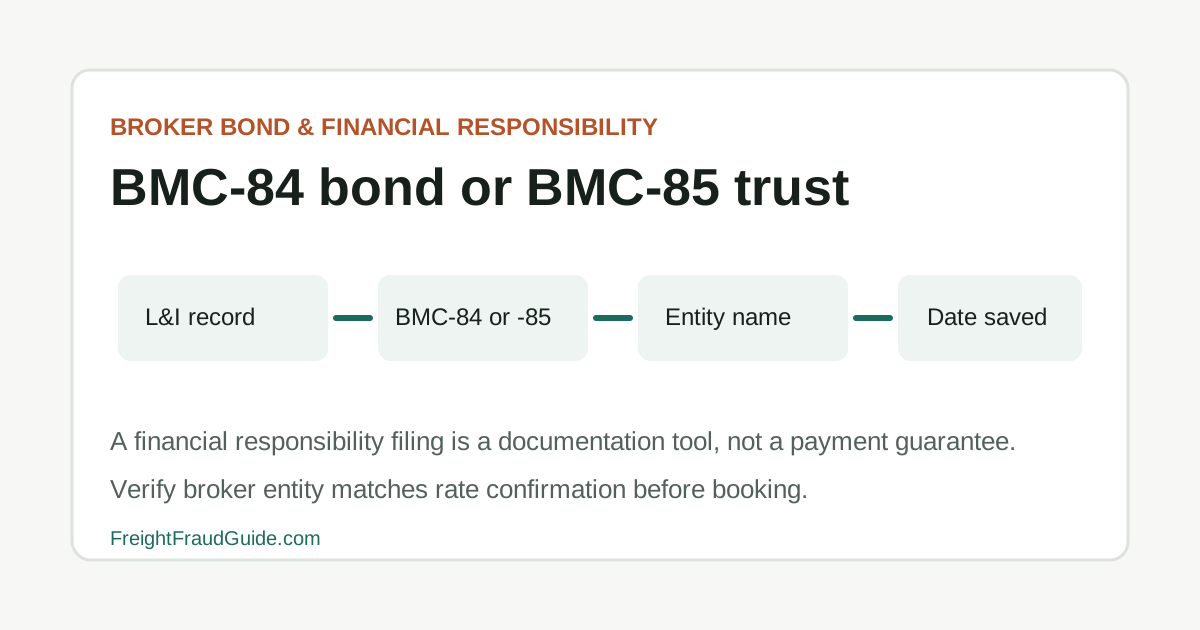
A BMC-84 bond or BMC-85 trust on file in L&I means the broker met the FMCSA financial responsibility requirement at the time of the filing. It doesn't mean the bond or trust is unlimited, that a claim will succeed, or that recovery is automatic. Claims involve specific procedures, documentation requirements, and in many cases deadlines that vary by surety and by the terms of the broker-carrier agreement.
What the bond or trust record confirms is that a specific surety or trust institution is involved and the filing was current at the lookup date. What it doesn't confirm is that an unpaid invoice falls within the scope of what's covered, or that the documentation exists to support a claim. The complete picture requires the load file too — rate confirmation, POD, invoice — not just the bond record.
Key Takeaways
- L&I financial responsibility record
- BMC-84 or BMC-85 reference
- Rate confirmation
- Invoice and POD
- Any claim or dispute notice
What to look for in the financial responsibility record
Review whether the broker has current financial responsibility on file, then save the lookup result.
A bond or trust reference helps document broker status but does not replace invoice, POD, and contract review.
What to look for in the financial responsibility record checklist
- Identify whether the record is BMC-84 or BMC-85.
- Check the broker entity name.
- Record the date and source of the lookup.
Records to preserve from the bond check
For this workflow, build the file around l&i financial responsibility record and bmc-84 or bmc-85 reference. Keep the first version separate from later corrections so the sequence remains clear.
Records to preserve from the bond check checklist
- L&I financial responsibility record
- BMC-84 or BMC-85 reference
- Rate confirmation
- Invoice and POD
- Any claim or dispute notice
Bond and trust record signals worth noting
Treat "No current financial responsibility record" as a reason to slow the transaction and document a call-back. It is not, by itself, a public accusation or final finding.
Bond and trust record signals worth noting checklist
- No current financial responsibility record
- Broker name mismatch
- Payment dispute framed as a simple bond issue without documents
- Pressure to skip contract terms
Questions the bond record should answer
Start with the question "Which broker entity is covered by the filing?" and tie the answer to a record, known contact, or dated instruction.
Questions the bond record should answer checklist
- Which broker entity is covered by the filing?
- Does the rate confirmation name the same entity?
- What documents support the unpaid amount?
- Has a qualified adviser reviewed claim deadlines or contract issues?
What a bond or trust filing doesn't confirm
The main trap here is assuming too much from an incomplete file. In particular: Do not assume bond or trust availability means recovery is assured.
What a bond or trust filing doesn't confirm checklist
- Do not assume bond or trust availability means recovery is assured.
- Do not assume the site can advise on claim rights.
- Do not assume an old screenshot proves current status.
Where to find broker financial responsibility records
Use FMCSA broker registration as a comparison point and save the lookup date. Official status can change, and legitimate company records can be impersonated.
Where to find broker financial responsibility records checklist
- FMCSA broker registration
- FMCSA registration forms
- FMCSA L&I
- Broker financial responsibility rule page
When a bond concern requires escalation
Escalate when the file reaches a concrete unresolved point, such as: A payment dispute is aging. Preserve the evidence and move the question to the right internal, insurance, legal, law-enforcement, or official reporting channel.
When a bond concern requires escalation checklist
- A payment dispute is aging.
- The broker entity or filing is unclear.
- A bond or trust claim is being considered.
Source Notes
Bond and trust records are not payment guarantees
BMC-84 and BMC-85 records are financial responsibility filings. They should not be described as a promise that a disputed invoice will be paid.
FAQ
Can I file a bond claim directly if a broker hasn't paid?
Bond and trust claims involve specific procedures, documentation requirements, and deadlines. This guide is not legal or financial advice. If you're considering a claim, consult qualified counsel and organize the full document file first.
What's the practical difference between a BMC-84 bond and a BMC-85 trust?
A BMC-84 is a surety bond where a third party guarantees the broker's financial obligations up to the bond amount. A BMC-85 is a trust fund arrangement where the broker maintains funds with a qualifying financial institution for the same purpose. Both satisfy the FMCSA financial responsibility requirement; the form of the filing is the broker's choice.
If a broker's financial responsibility filing has lapsed, what does that mean for unpaid invoices?
A lapse may affect the broker's FMCSA registration status and may affect options for recovering through a bond or trust claim. The timeline of the lapse relative to the load matters for what avenues remain available. Payment disputes in this situation benefit from qualified professional review before any claim steps are taken.
Source References
- Licensing & Insurance Public Federal Motor Carrier Safety Administration. primary source. Last checked 2026-06-02. Official public portal for authority, insurance, and broker financial responsibility records.
- FMCSA Registration Federal Motor Carrier Safety Administration. primary source. Last checked 2026-06-04. FMCSA registration landing page. Use only as a current official entry point because registration modernization details can change.
- Broker Registration Federal Motor Carrier Safety Administration. primary source. Last checked 2026-06-02. Official FMCSA broker registration page covering broker authority and financial responsibility filing requirements.
- Registration Forms Federal Motor Carrier Safety Administration. primary source. Last checked 2026-06-01. Official FMCSA form reference for process agent, insurance, and broker financial responsibility filings.
- Form BMC-84 Broker Surety Bond Federal Motor Carrier Safety Administration. primary source. Last checked 2026-06-01. FMCSA broker surety bond form. Use for form meaning, not as proof that a specific broker's current bond is active.
- Form BMC-85 Broker Trust Fund Agreement Federal Motor Carrier Safety Administration. primary source. Last checked 2026-06-01. FMCSA broker trust fund form. Use alongside current L&I records before relying on financial responsibility status.
- Broker and Freight Forwarder Financial Responsibility Federal Motor Carrier Safety Administration. primary source. Last checked 2026-06-01. FMCSA rule page for broker and freight forwarder financial responsibility. Use carefully; it is not payment advice.