
How this comes up in practice
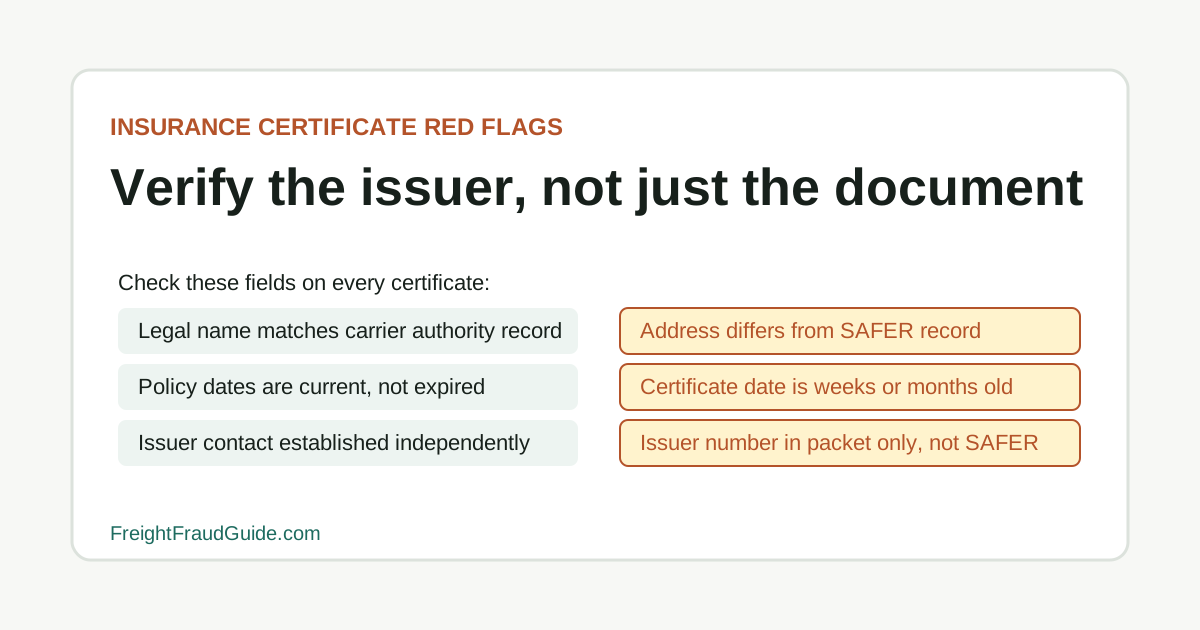
An insurance certificate can pass a visual check while containing a detail that doesn't survive a phone call to the issuer. The version that comes up most often: the layout, logo, expiration date, and coverage language all look right, but calling the issuer phone number from the certificate reaches a voicemail or an agent who cannot find the policy number in their system. The certificate doesn't need to appear suspicious to be unverifiable. The check that surfaces this is a call to the insurer using a number confirmed before this transaction — not the one printed on the certificate — with a specific request to verify the policy number and the named insured. A certificate that cannot be confirmed through that call is not a confirmed certificate.
What a certificate of insurance actually certifies
A certificate of insurance is a summary document — it shows what coverage a policy provides, to whom, and through which insurer as of the date issued. It is not the policy itself, not a real-time coverage check, and not the issuing insurer's direct word on current status. For adjacent verification steps, compare this with Carrier Packet Verification Checklist, How to Verify a Motor Carrier, and FMCSA Registration Guide.
Certificates can be produced well enough that a visual review won't catch a problem. The name, logo, format, and coverage language can all be copied from legitimate certificates. What a forged certificate typically can't withstand is a confirmation call to the issuer at a contact number established independently of the certificate — not the number printed on it.
Treating a certificate as final proof of coverage without verifying it with the issuer is an incomplete check. For new carriers, high-value loads, or any situation where a certificate looks slightly off, the issuer confirmation call is what makes the certificate meaningful as a verification document rather than a plausible-looking form.
Key Takeaways
- Certificate of insurance
- Carrier packet
- L&I record
- Issuer contact notes
- Broker-carrier agreement
What to review in an insurance certificate
Compare the certificate to the carrier entity, policy dates, coverage descriptions, certificate holder, and issuer contact.
Treat a certificate as a prompt to verify, not as final proof.
What to review in an insurance certificate checklist
- Check entity names.
- Confirm dates.
- Use a known issuer contact when needed.
Certificate records to save and verify
For this workflow, build the file around certificate of insurance and carrier packet. Keep the first version separate from later corrections so the sequence remains clear.
Certificate records to save and verify checklist
- Certificate of insurance
- Carrier packet
- L&I record
- Issuer contact notes
- Broker-carrier agreement
Insurance certificate signals worth a call
Treat "Name mismatch" as a reason to slow the transaction and document a call-back. It is not, by itself, a public accusation or final finding.
Insurance certificate signals worth a call checklist
- Name mismatch
- Expired or future-dated certificate
- Issuer phone differs from known records
- Coverage description does not fit the load
- Image-only certificate with visible edits
Questions the certificate should answer
Start with the question "Who issued this certificate?" and tie the answer to a record, known contact, or dated instruction.
Questions the certificate should answer checklist
- Who issued this certificate?
- Does the insured name match the carrier?
- What coverage is required for this load?
- Who should receive the certificate holder copy?
What a certificate doesn't confirm
The main trap here is assuming too much from an incomplete file. In particular: Do not assume a certificate equals active coverage.
What a certificate doesn't confirm checklist
- Do not assume a certificate equals active coverage.
- Do not assume the site can interpret policy coverage.
- Do not assume a certificate covers every cargo or lane.
Official insurance records to compare
Use FMCSA L&I as a comparison point and save the lookup date. Official status can change, and legitimate company records can be impersonated.
Official insurance records to compare checklist
- FMCSA L&I
- FMCSA insurance filing requirements
- Carrier or insurer known contacts
When certificate concerns require escalation
Escalate when the file reaches a concrete unresolved point, such as: Coverage appears missing or inconsistent. Preserve the evidence and move the question to the right internal, insurance, legal, law-enforcement, or official reporting channel.
When certificate concerns require escalation checklist
- Coverage appears missing or inconsistent.
- The carrier cannot explain certificate differences.
- A claim, theft, or accident concern exists.
Source Notes
Certificates can be stale or altered
FMCSA fraud guidance warns that document examination is critical and insurance certificates can be fraudulent.
FAQ
If I can't confirm an insurance certificate by the pickup date, should I delay release?
Yes — hold pickup until you can confirm the certificate through an independently established issuer contact. A certificate that cannot be confirmed is not a confirmed certificate. Document the attempt and outcome.
How do I confirm insurance coverage if I can't reach the issuer by phone before pickup?
Ask the carrier to have the insurer email a confirmation directly to your address. If the carrier says they can't reach their own insurer, that's significant — a carrier who can't verify their own current coverage through a known channel is a reason to hold the transaction rather than proceed on the certificate alone.
What coverage should a certificate show for a standard freight load?
At minimum, auto liability coverage appropriate for the vehicles used and cargo insurance covering the commodity type and value. Required amounts vary by regulation, commodity, and contract terms. If you're unsure whether a certificate's coverage is adequate for a specific load, a qualified insurance professional is the right resource — not this guide.
Source References
- Licensing & Insurance Public Federal Motor Carrier Safety Administration. primary source. Last checked 2026-06-02. Official public portal for authority, insurance, and broker financial responsibility records.
- Fraud Alerts Federal Motor Carrier Safety Administration. primary source. Last checked 2026-06-04. FMCSA alert page for phishing attempts, spoofed portals, fake notices, SAFER impersonation, and registration-related scams.
- Insurance Filing Requirements Federal Motor Carrier Safety Administration. primary source. Last checked 2026-06-02. Official FMCSA insurance and financial responsibility filing page. Recheck for Motus-related filing changes.
- Broker and Carrier Fraud and Identity Theft Federal Motor Carrier Safety Administration. primary source. Last checked 2026-06-01. FMCSA guidance on broker and carrier fraud, unauthorized USDOT use, suspicious links, SAFER phone comparison, NCCDB, OIG, FTC, and IC3 reporting pointers.