
How this comes up in practice
A common pattern in carrier dispatch: an email arrives from a domain that differs by one character from a broker the operation has worked with before. The rate, lane, and shipper name all match what is expected. The carrier's packet goes out before anyone compares the sending domain against a prior rate confirmation. Calling the broker's main number from an older document — not from anything in the new email — is the check that would have surfaced the problem first. The domain difference is one character in a long name; the display name in the email client looks right, but the full sender address does not match. That comparison, run before responding to the new thread, is the step that changes the outcome.
The gap this workflow closes
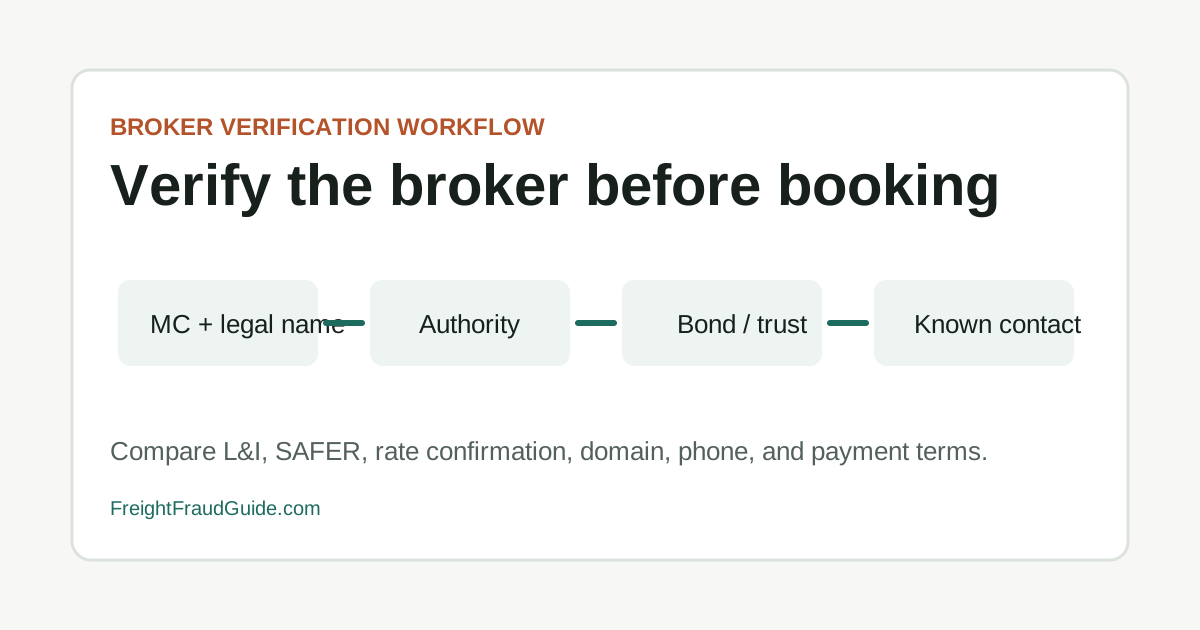
Broker verification failures tend to occur not because the check wasn't done, but because it was done once, at the wrong point, or with the wrong question. An authority check run when first setting up a broker relationship doesn't cover loads booked six months later. A callback to a number in the current email thread doesn't confirm the sender is from the broker — it confirms whoever answered the phone. For adjacent verification steps, compare this with Broker MC Number Lookup Checklist, Broker Authority Status Explained, and Broker Bond / BMC-84 / BMC-85 Explained.
The check that matters is a comparison of the communicating party against the official FMCSA record, using a contact path that wasn't introduced in the same transaction. That's the gap: a broker name, MC number, and polished rate confirmation can all be exactly right while the person sending them has no connection to the entity they're representing.
Authority status, financial responsibility, and contact verification are separate checks because they catch different problems. A broker with active authority can have a lapsed bond. A real MC number can appear in an email from someone who has no relationship with that company. Running each check separately, close to booking rather than once during setup, is what makes the workflow complete.
Key Takeaways
- Load posting screenshot
- Rate confirmation
- Broker-carrier agreement
- Payment instructions
- L&I and SAFER lookup screenshots
- Email headers when available
What to confirm before accepting the load
Start with the broker identity shown on the load offer, rate confirmation, email signature, and payment terms.
The first decision is whether the communicating party lines up with the official broker record and a known contact path.
What to confirm before accepting the load checklist
- Compare MC number, legal name, DBA, address, and phone number.
- Check broker authority and financial responsibility in L&I.
- Call back through a number found in official or independently established records, not only the new email thread.
Documents to pull before booking
For this workflow, build the file around load posting screenshot and rate confirmation. Keep the first version separate from later corrections so the sequence remains clear.
Documents to pull before booking checklist
- Load posting screenshot
- Rate confirmation
- Broker-carrier agreement
- Payment instructions
- L&I and SAFER lookup screenshots
- Email headers when available
Signals that require a call-back
Treat "New domain or free email account" as a reason to slow the transaction and document a call-back. It is not, by itself, a public accusation or final finding.
Signals that require a call-back checklist
- New domain or free email account
- Broker asks driver to use a different carrier name
- Rate far above market with pressure to book
- Payment instructions changed after dispatch
- Official phone number cannot confirm the load
Questions that need a confirmed answer
Start with the question "Which broker entity is tendering this load?" and tie the answer to a record, known contact, or dated instruction.
Questions that need a confirmed answer checklist
- Which broker entity is tendering this load?
- Who can confirm this rate confirmation through a known channel?
- What broker authority and financial responsibility records are current today?
- Who approved any payment or routing change?
Broker verification assumptions to avoid
The main trap here is assuming too much from an incomplete file. In particular: Do not assume a PDF proves authority.
Broker verification assumptions to avoid checklist
- Do not assume a PDF proves authority.
- Do not assume a familiar company name means the sender is from that company.
- Do not treat one successful past load as current verification.
Official broker records to compare
Use FMCSA Licensing & Insurance Public as a comparison point and save the lookup date. Official status can change, and legitimate company records can be impersonated.
Official broker records to compare checklist
- FMCSA Licensing & Insurance Public
- FMCSA SAFER Company Snapshot
- NCCDB complaint search only with its limitations
- FMCSA fraud and identity theft guidance
When to hold the load
Escalate when the file reaches a concrete unresolved point, such as: Official record conflicts with the rate confirmation. Preserve the evidence and move the question to the right internal, insurance, legal, law-enforcement, or official reporting channel.
When to hold the load checklist
- Official record conflicts with the rate confirmation.
- Known broker contact denies the load.
- Pickup is imminent and identity is unresolved.
- Payment instructions changed through an unconfirmed channel.
Source Notes
FMCSA records are comparison points
Use L&I for authority and broker financial responsibility, and SAFER for company contact comparison. A matching record does not prove the sender is authorized.
FAQ
What's the most important step in verifying a broker before accepting a load?
Confirm the broker's MC number against the legal entity name in FMCSA L&I, then verify the contact through a channel established independently — not only through the email thread introducing the load. A matching MC number is not enough if the contact cannot be confirmed.
Should verification differ between a first-time broker and one I've used before?
The first booking requires a complete check: L&I authority, financial responsibility, contact verification, and rate confirmation review. For repeat brokers, the authority and financial responsibility check should still be current — status can change between loads. The main shortcut that's appropriate is skipping the full introduction when the contact path is already independently established.
What if a verification concern appears after I've already booked but before pickup?
Stop before dispatch if possible. Contact the broker through a number established before this booking — not through the current email thread — to confirm the load is real. Document the attempt and response. If the concern isn't resolved, treat the pickup as suspended until you have a confirmation from a verified contact.
Source References
- Licensing & Insurance Public Federal Motor Carrier Safety Administration. primary source. Last checked 2026-06-02. Official public portal for authority, insurance, and broker financial responsibility records.
- SAFER Company Snapshot Federal Motor Carrier Safety Administration. primary source. Last checked 2026-06-03. Official Company Snapshot lookup. Treat as a current record check, not a guarantee of transaction authority.
- Broker and Carrier Fraud and Identity Theft Federal Motor Carrier Safety Administration. primary source. Last checked 2026-06-01. FMCSA guidance on broker and carrier fraud, unauthorized USDOT use, suspicious links, SAFER phone comparison, NCCDB, OIG, FTC, and IC3 reporting pointers.
- Broker Registration Federal Motor Carrier Safety Administration. primary source. Last checked 2026-06-02. Official FMCSA broker registration page covering broker authority and financial responsibility filing requirements.
- NCCDB Complaint Search Database Federal Motor Carrier Safety Administration. primary source. Last checked 2026-05-28. NCCDB search page includes important non-endorsement and reliance limitations.