
How this comes up in practice
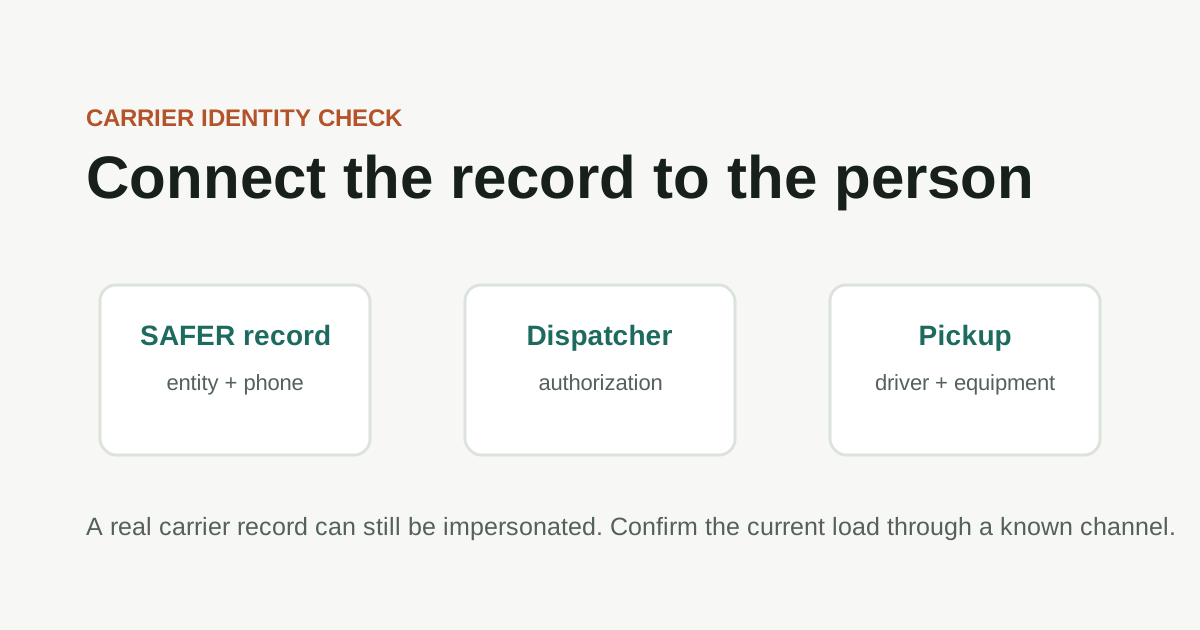
Carrier identity misuse follows a recognizable pattern: a fraudster obtains enough packet documents to present as an established carrier, creates or takes over a load board profile using those credentials, and books loads before anyone places an independent call to verify. The legitimate carrier learns about it from brokers or shippers calling to ask about delivery failures. The check that surfaces this earliest is a direct call to the SAFER-listed number — not the dispatcher contact in the current email thread — to confirm whether the company dispatched a driver for this specific load. A 'no' answer, or a SAFER number that connects to a company that doesn't recognize the transaction, is the first record in the incident file.
How identity misuse differs from other fraud patterns
Carrier identity theft is distinct from most fraud patterns because the legitimate carrier is also a victim. Their USDOT number, legal name, and documents are real — and often the reason the fraud works is precisely because those records check out. The carrier isn't misrepresenting anything; someone else is representing themselves as that carrier without authorization. For adjacent verification steps, compare this with USDOT Number Misuse Red Flags, and How Fraudsters Hijack Carrier Profiles.
This means the standard approach — look for things that don't add up — applies differently here. The registration, authority status, and packet documents may all look exactly right. The problem is that the person presenting them isn't from the company those records belong to. The check that surfaces this is an external call: reaching the company's actual management through a contact that wasn't provided by the current transaction.
Warning signs in this pattern cluster around contact and communication: a new email domain for an established carrier, a dispatcher who can't connect to the company's main office, or a packet that appeared before any contact with company management was independently established. Any single one might have an innocent explanation; multiple together warrant the SAFER callback before pickup proceeds.
Key Takeaways
- Carrier packet
- Emails and domains
- Official lookup screenshots
- Driver/equipment records
- Carrier denial or confirmation notes
What to check when identity misuse is suspected
Look for changed contacts, unusual packet reuse, mismatched email domains, and loads booked by someone the carrier cannot confirm.
The key question is whether the communicating person is authorized by the carrier named in the records.
What to check when identity misuse is suspected checklist
- Call the carrier through a known number.
- Compare packet metadata and dates.
- Save suspicious communications.
Records to preserve when warning signs appear
For this workflow, build the file around carrier packet and emails and domains. Keep the first version separate from later corrections so the sequence remains clear.
Records to preserve when warning signs appear checklist
- Carrier packet
- Emails and domains
- Official lookup screenshots
- Driver/equipment records
- Carrier denial or confirmation notes
Identity misuse signals worth investigating
Treat "New email for an established carrier" as a reason to slow the transaction and document a call-back. It is not, by itself, a public accusation or final finding.
Identity misuse signals worth investigating checklist
- New email for an established carrier
- Dispatcher refuses direct carrier call-back
- Documents have inconsistent names
- Carrier says it did not book the load
- USDOT number appears with a different address
Questions to ask before proceeding
Start with the question "Does the carrier recognize this dispatcher?" and tie the answer to a record, known contact, or dated instruction.
Questions to ask before proceeding checklist
- Does the carrier recognize this dispatcher?
- Who issued the packet?
- Which account or profile may be compromised?
- Which parties need notice before pickup?
What carrier documents don't confirm
The main trap here is assuming too much from an incomplete file. In particular: Do not accuse the legitimate carrier without evidence.
What carrier documents don't confirm checklist
- Do not accuse the legitimate carrier without evidence.
- Do not assume all packet documents are genuine.
- Do not assume a load board profile is under the carrier's control.
Official records for carrier identity comparison
Use FMCSA fraud guidance as a comparison point and save the lookup date. Official status can change, and legitimate company records can be impersonated.
Official records for carrier identity comparison checklist
- FMCSA fraud guidance
- FMCSA fraud alerts
- SAFER
- FTC identity theft resources
When to hold freight and escalate
Escalate when the file reaches a concrete unresolved point, such as: Carrier denies involvement. Preserve the evidence and move the question to the right internal, insurance, legal, law-enforcement, or official reporting channel.
When to hold freight and escalate checklist
- Carrier denies involvement.
- Freight is already picked up.
- A profile, email, or USDOT number appears compromised.
Source Notes
Identity theft language needs care
Use 'possible identity misuse' until the affected carrier, official reporting channel, insurer, law enforcement, or counsel establishes the facts.
FAQ
If a carrier denies involvement in a load booked under their name, what's the next step?
Preserve all records immediately — the contact path, packet, rate confirmation, and communications. Do not release the freight if it hasn't moved. Contact the affected carrier through their official number, and consider IC3 and NCCDB reporting as appropriate.
What should I do if identity theft warning signs appear after I've already booked but before pickup?
Stop before freight release. Document everything in its current state — emails, domains, the packet as received. Call the carrier's SAFER number and ask whether they dispatched this load, without accusing anyone. Their response tells you whether to proceed, hold, or escalate. If they say no, notify the broker and treat the transaction as suspended.
Who should I notify if I believe a carrier's identity is being misused on my load?
The legitimate carrier through their SAFER number, your internal compliance team, and the load board platform if a profile was involved. If freight has already moved under suspicious circumstances, law enforcement and your insurer should also be notified. IC3 is appropriate if the misuse involved email spoofing or account takeover.
Source References
- Broker and Carrier Fraud and Identity Theft Federal Motor Carrier Safety Administration. primary source. Last checked 2026-06-01. FMCSA guidance on broker and carrier fraud, unauthorized USDOT use, suspicious links, SAFER phone comparison, NCCDB, OIG, FTC, and IC3 reporting pointers.
- Fraud Alerts Federal Motor Carrier Safety Administration. primary source. Last checked 2026-06-04. FMCSA alert page for phishing attempts, spoofed portals, fake notices, SAFER impersonation, and registration-related scams.
- Report Identity Theft Federal Trade Commission. primary source. Last checked 2026-05-15. Federal identity theft reporting and recovery resource. Freight companies should still preserve transaction-specific records.
- SAFER Company Snapshot Federal Motor Carrier Safety Administration. primary source. Last checked 2026-06-03. Official Company Snapshot lookup. Treat as a current record check, not a guarantee of transaction authority.